Stuffing the Neighbours: A Field Guide to Britain’s Scarecrow Season
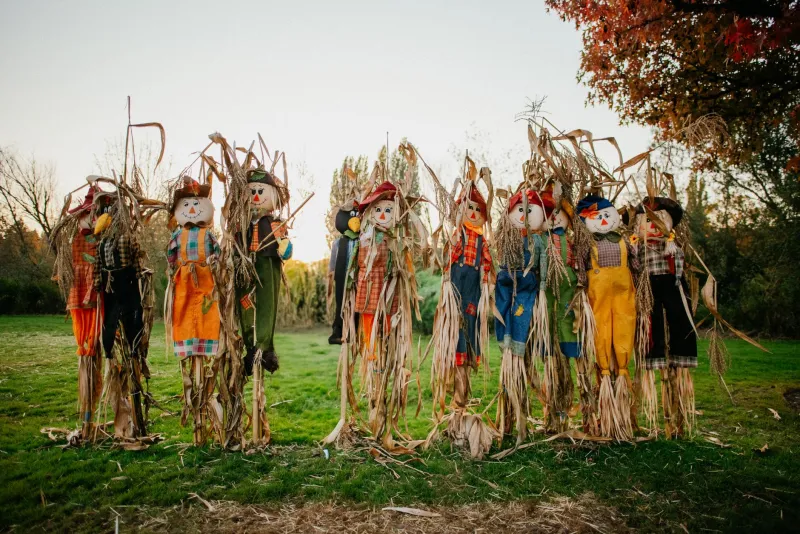
The first clue is usually a traffic cone in a tweed jacket. Then a pair of tights stuffed with straw, a broom handle, a hat borrowed from someone’s grandad, and a notice taped to the village hall door: Scarecrow Trail — maps £1, proceeds to the roof fund. By the time you’ve parked the car, half the parish appears to have been quietly replaced by characters from a film nobody can quite name.
This is scarecrow season in Britain, and it is stranger and more revealing than the word “festival” suggests. Across villages in Yorkshire, Somerset, Cumbria, Norfolk and wherever else a committee can rustle up a laminated map, straw figures appear outside pubs, on green verges, in front gardens and, occasionally, halfway up a telegraph pole. They are part craft fair, part guerrilla art trail, and part an annual audit of who in the village has the best shed, the darkest sense of humour and the strongest opinions about zip ties.
The Temporary Residents
A good scarecrow is not really a scarecrow. It is a portrait. The best ones are recognisable before you read the label: the headteacher with the enormous mug, the vicar with the bicycle clips, the pub landlord with the dog that never leaves his side. Others are cultural shorthand — a superhero with a bin-bag cape, a pop star in last year’s fancy-dress wig, a film scene recreated with two deckchairs and a hosepipe. The result is a village that has been briefly colonised by its own jokes.
Materials are gloriously improvised. Pillowcases, tights, old shirts, garden canes, baler twine, plastic sacks, a wig from the charity shop, a pair of boots that were “too good to bin”. Some entries are engineering projects; others are held together by hope and a single cable tie. Weather is the great leveller. By the second weekend, every scarecrow has the same slightly disappointed posture, as if it has just heard the parish council’s latest update on parking.
The Unwritten Rulebook
Nobody hands you the rules. They are absorbed by walking the trail and listening to other people mutter. The first rule is that effort counts, but polish does not. A perfectly constructed figure can be admired, but a scarecrow with a wonky arm and a clearly homemade sign will often win the affection. The second rule is that inside jokes are encouraged, provided they are legible to at least forty per cent of the village. A reference so private that only two people understand it is not mischief; it is a riddle with straw.
The third rule is that children’s entries are sacred. A scarecrow made by a ten-year-old with a felt-tip face and one optimistic button eye must be praised without qualification. The fourth is that you do not, under any circumstances, outshine your immediate neighbour too obviously. A modest pirate outside number 14 is fine. A full-scale galleon with rigging, lighting and a recorded sea shanty may be viewed as a declaration of war.
Judging — where there is judging — tends to be a masterpiece of diplomatic vagueness. Categories might include Best in Show, Most Creative, Best Use of a Gardener, and the increasingly popular “You Can Tell Who It Is”. Votes are cast with spare change, pub tokens or a clipboard left unattended in the church porch. The results are announced with the solemnity of a general election and the speed of a raffle.
Friendly Rivalry, Quietly Escalated
Scarecrow festivals are competitive in the way that village life is competitive: politely, relentlessly, and with a great deal of cake. One year a pub puts a straw figure on the roof. The next year the shop opposite responds with two figures and a fake lamp post. A neighbouring village hears about it and raises the stakes with a whole tableau in the bus shelter. Nobody admits to keeping score. Everybody knows exactly where the score stands.
This is where the quiet one-upmanship lives. It is not the loud rivalry of trophies. It is the rivalry of the well-placed prop, the unexpectedly good wig, the scarecrow that makes people stop their cars. It is also, crucially, a fundraiser. Trails collect for roof repairs, food banks, hedgehog hospitals and village hall heating. The creative mischief has a collection tin in its hand, and that takes the edge off any lingering competitiveness. You can be quietly pleased with your sea captain and still put a pound in the box for the church roof.
What the Straw Says About Us
A scarecrow festival is a temporary exhibition of community pride, but it is also a permission slip. For a fortnight, British village life allows itself to be visibly odd. People who would never call themselves artists construct figures from bin bags and broom handles. People who usually communicate through nods and bin-day etiquette suddenly become curators of a roadside gallery. Children inspect the entries with the seriousness of critics. Dog walkers become tour guides.
And then, almost as soon as it began, it is over. The scarecrows come down. The hats go back in the cupboard. The straw goes on the compost heap. The village returns to normal, which is to say it returns to a slightly different normal, because someone has already been heard saying, “Next year, we could do a whole theme.”
That is the real legacy of the scarecrow season: not the straw, but the itch. The suspicion that the village green is a stage, the front garden is a gallery, and the neighbours — given a broom handle and a bag of tights — are capable of something quietly magnificent. Next autumn, keep an eye out for the figure with the slightly too-good boots. You’ll know the one. Everyone will.