Five Minutes Saved, One Hedge Explored: The Quiet Anarchy of the Unofficial Footpath
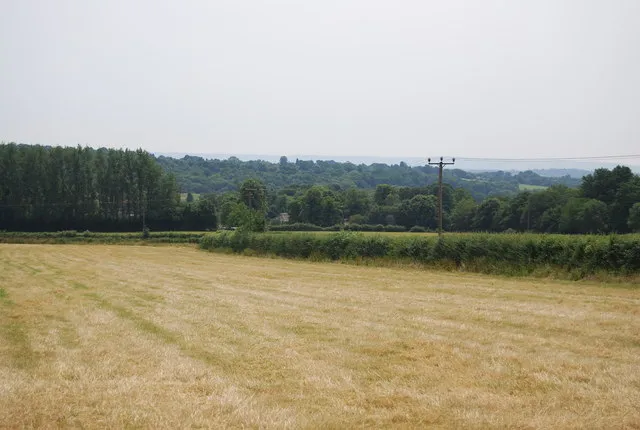
Photo: N Chadwick , CC BY-SA 2.0, via Wikimedia Commons
There is a moment on a British country walk when the official path does something faintly ridiculous. It swings left around a field, follows a hedge for three sides of a square, and then delivers you to a gate that is roughly forty yards from where you started. The map is correct. The route is legal. And yet, half-hidden in the hawthorn, there is a gap. A worn line of grass. A plank over a ditch. A stile with one loose step and the unmistakable shine of frequent use.
You do not need to be told what it is. It is the shortcut. It appears on no Ordnance Survey sheet, no council leaflet, no tidy waymark. It exists because enough people have quietly decided that the official route is not the only route worth taking.
The map is not the territory
Britain loves a right of way. We have definitive maps, public footpath signs, permissive paths, bridleways, byways and the kind of local authority paperwork that can make a simple Sunday stroll feel like a planning inquiry. The system is a genuine wonder: hard-won access, recorded and defended, stitched into the landscape by generations of walkers, ramblers and stubborn parish clerks.
But the map is not the territory. The territory has brambles. It has a farmer who has moved a gate, a stream that has changed its mind, a housing estate that has swallowed a footpath sign, and a field of long grass that nobody fancies wading through in November. The territory also has desire lines: those informal tracks that appear wherever people decide that the shortest, pleasantest or least muddy route is not the one on the drawing board.
So the gap in the hedge is not really an act of rebellion. It is more like a conversation. The official path makes a proposal; the walking public makes a small, practical amendment. A branch is held back. A stone is placed in the mud. A gap becomes a route.
Anatomy of a good gap
A proper unofficial shortcut has a particular look. It is rarely dramatic. There may be a slight parting in the hedge, a dark opening at knee height, a smear of mud on a wooden rail. The grass beneath is flattened but not dead. There is often a single piece of evidence that someone has been this way with purpose: a dog lead's swing, a child's welly print, a crisp packet that someone has clearly felt guilty about and wedged into a fork of blackthorn.
The best ones are not signposted, but they are not exactly secret either. They are known locally as 'the back way', 'the old school run', 'the gap by the water tower', 'the quick way to the pub'. They are passed on by word of mouth, usually with a slight lowering of the voice, as if the hedge might be listening.
And they are maintained. Not by a committee, not by a council crew, but by an anonymous collective of dog walkers, ramblers, cyclists, teenagers and people who just want to get to the shop before it closes. Someone has clipped a bramble. Someone has dragged a fallen branch aside. Someone has put a second plank over the ditch because the first one was getting spongy. There is no plaque. There is no ribbon-cutting. There is just a path that keeps working because people keep using it.
The unwritten rules
The etiquette is simple and largely unspoken, which is the British way. You close what you open. You do not widen a gap just because you are wearing a big coat. You do not cut barbed wire, saw through a fence or encourage a bull to investigate. You do not trample a seedbed to save six seconds. You leave the hedge looking roughly as you found it, minus the bit you squeezed through.
You also do not make a fuss. The unofficial path thrives on a kind of polite invisibility. It is not a campaign. It is not a lifestyle brand. It is not something to be turned into a laminated trail with a QR code and a car park. If you meet someone coming the other way, you nod, maybe say 'morning', and step aside. That is the whole constitution.
There is a legal hinterland here, of course. Trespass in England and Wales is generally a civil matter rather than a criminal one, but that does not mean every gap is a public right of way, and it certainly does not mean you should ignore signs, crops or livestock. The law has opinions. The hedge has a gap. Most people navigate the space between the two with a mixture of local knowledge, common sense and a willingness to retreat if a farmer appears on a quad bike looking unimpressed.
Who keeps the paths open?
The answer is: nobody and everybody. The official network is maintained by councils, landowners and volunteers. The unofficial network is maintained by use. A path that is walked is a path that stays open. A path that is forgotten grows over in a season. There is something rather lovely about that. It means the shortcut is not just a route; it is a small ongoing vote of confidence in the landscape.
In villages, these paths are part of the mental map. They connect the school to the rec, the allotments to the pub, the housing estate to the footbridge over the bypass. They are the routes children take when they are old enough to be trusted but young enough to enjoy the thrill of a gap in a hedge. They are the routes adults take when they are late, or tired, or simply unwilling to walk three sides of a field for the sake of a dotted line.
A folklore in motion
What makes these paths feel like folklore is that they are never quite finished. They change with the seasons and the hedges. A gap that was clear in January can be a wall of nettles by July. A plank that was reliable in autumn can be a slippery hazard by February. The route survives on memory, improvisation and the occasional pair of secateurs.
And there is a small thrill in that. Stepping through a gap that is not on the map is a reminder that the countryside is not just a backdrop for a walk; it is a place where people live, work, cut hedges, move gates and make decisions. The shortcut is a tiny negotiation between all of that. It says: the official route is fine, but we have found a better way to get to the same place, and we are going to keep it going.
So next time you find one — a worn line in the grass, a gap in the hawthorn, a stile that looks like it has been repaired by three different people with three different ideas — enjoy it. Step through carefully. Close what you open. Do not widen it. And give a quiet nod to the unknown person who clipped the bramble, dragged the branch and saved you five minutes on a Sunday.
That is Madhuwan's kind of field note: a path that appears on no map, but knows exactly where it is going.