A Ribbon for Effort: Why the Village Fete's Beautiful Mess Is the Whole Point
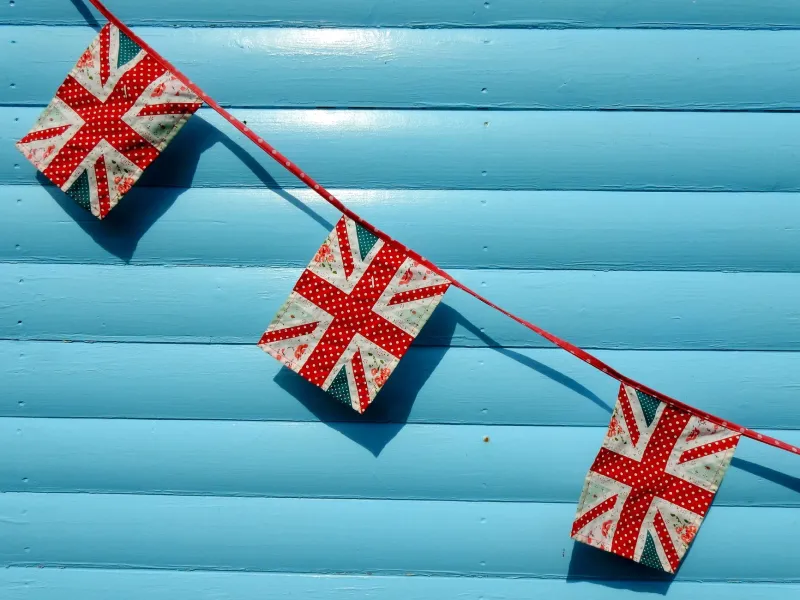
The bunting is down. The gazebo has been folded back into its bag, which never quite fits. Somewhere in a village hall cupboard, a box of tombola prizes is waiting for next year, alongside a half-used bottle of bubble bath and a puzzle that may or may not have all its pieces. The village fete has done its quiet work for another season, and the committee is recovering with a cup of tea and a mild sense of disbelief that it all came together again.
Because it always does, more or less. The great British village fete is not a polished production. It is a temporary republic of raffle tickets, unclaimed cake, slightly overconfident coconut shies and produce tent politics. It is a place where things are almost right, where the PA system squeals, where the dog show judge is clearly making it up as they go along, and where nobody really minds. The fete's magic is not in perfection. It is in the beautiful, mildly chaotic reality of community life.
The tombola as a philosophical exercise
Let us begin with the tombola, which is less a game of chance and more a lesson in acceptance. You pay your pound, you spin the drum, you pull out a ticket ending in a 5 or a 0, and you are invited to choose a prize from a table of objects that have been donated by people who have recently had a clear-out. There is a tin of soup. There is a miniature bottle of something indeterminate. There is a scented candle shaped like a rose, still in its cellophane, slightly dusty. There is a boxed set of gardening gloves, size small.
You did not need any of these things. You did not want most of them. But you take one anyway, because the tombola is not really about winning. It is about the ritual: the clatter of the drum, the hopeful pause, the shared smile when someone wins a prize that is objectively worse than the one before it. The dubious prize is the point. It becomes a story. It sits on your kitchen windowsill for a fortnight before being quietly re-donated to next year's tombola, where it will begin its journey again. This is not waste; it is a circulating library of mildly disappointing objects, and it binds the village together one raffle ticket at a time.
Marrows, judgement and the politics of the produce tent
The produce tent is where the fete reveals its competitive heart. On the surface, it is a gentle display of carrots, jam and floral arrangements. Beneath, it is a quiet blood sport. The marrow competition alone could fill a small paperback. Judging criteria are mysterious. Size matters, but so does uniformity. Colour is considered. The straightest runner bean is not always the winner. There are categories for the best Victoria sponge, the heaviest onion, the most impressive pot of chutney, and the elusive 'best in show', which carries with it a ribbon and a year of bragging rights.
The produce tent is a parliament of small vanities, and that is exactly why it works. People who would never otherwise enter a competition will spend weeks nurturing a single perfect tomato. They will consult older neighbours about the correct moment to harvest. They will pretend not to care and then hover near the judging table with the intensity of a hawk. And when the results are pinned up, there is always a mild controversy. A cucumber has been disqualified for being slightly curved. A jam has been marked down for setting too firmly. Someone's prize-winning beetroot is suspiciously large, and everyone has a theory.
This is the fete at its best: a place where small things matter enormously for a few hours, and then stop mattering as soon as the tea urn is switched on. The ribbon is not really about the marrow. It is a social contract. It says: we take this seriously enough to make it fun, and we do not take it so seriously that we fall out about it. Mostly.
The coconut shy and other small humiliations
The coconut shy is a masterclass in sanctioned failure. You stand behind a line, you are handed three wooden balls, and you are invited to knock a coconut off its stand. You will not do this. The coconut is heavier than it looks. The balls are lighter than they should be. The man running the stall, who has been doing this for twenty years, watches with the deadpan encouragement of someone who knows exactly how this ends. You throw. You miss. You throw again. You miss again. The coconut remains, smug and immovable.
And yet, this is somehow enjoyable. The fete is one of the few places where failing in public is not humiliating but lightly comic. There is no shame in missing the coconut, because everyone misses the coconut. The same applies to the welly wanging, the guess-the-weight-of-the-cake stall, the lucky dip, the hook-a-duck, the roll-a-coin-into-a-bowl-of-flour. These are small, low-stakes tests, and they give us permission to be a bit rubbish in front of our neighbours. That is a rare and valuable thing.
The committee, the risk assessment and the fight against polish
Behind every village fete is a committee of people who have day jobs. They meet in the pub or the kitchen of someone with a large table. They draw up a rota. They fill in a risk assessment. They worry about the weather, the parking, the insurance, and whether the vicar will agree to open the proceedings with a few words. They book the brass band, or the ukulele group, or the woman who does the folk songs. They source the gazebos. They beg for raffle prizes. They stand in a field at 7am, putting up signs, wondering why they agreed to this.
The temptation, in 2026, is to professionalise. To hire a stage. To book a tribute act. To call it a festival and sell tickets online. There is nothing wrong with ambition, but there is a risk. The fete's charm lies in its amateurism. The PA system that whistles during the raffle draw. The dog show where the judge is clearly winging it. The cake stall where the labels are handwritten and slightly smudged. The bunting that sags in the middle. These are not flaws to be corrected; they are the texture of the thing.
Keeping the chaos alive does not mean abandoning safety or organisation. It means resisting the urge to sand down every rough edge. It means leaving room for the unplanned: the child who wins the hula-hoop contest by default, the sudden downpour that sends everyone into the tea tent, the moment when the raffle prize is won by the person who donated it. These are the bits people remember.
Why it matters
The village fete raises money for the hall roof, the playgroup, the church, the cricket club. That is important. But it also raises something less tangible: permission to be imperfect together. In a world of curated feeds and polished events, the fete is gloriously unrehearsed. It is a place where different generations mix without a screen, where you can buy a jam you did not need and a book you will never read, where you can miss a coconut and laugh about it.
The bunting will go up again next year. The tombola prizes will be re-donated. The marrow competition will be fiercely contested. Someone will complain about the judging. Someone else will win a ribbon and pretend it does not matter. And the fete will be slightly wrong, in all the right ways. That is not a bug. It is the whole point.