Somewhere Between the 47 and Everything Else: Notes from the Bus Shelter
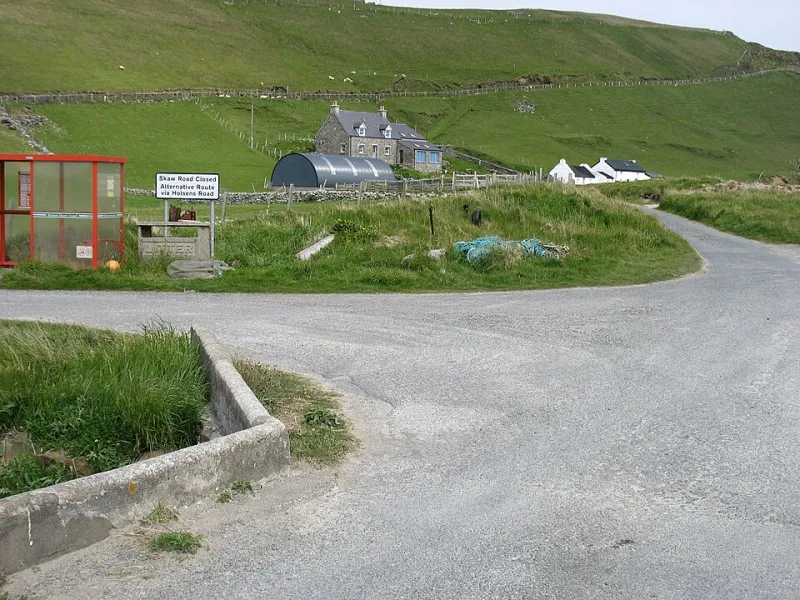
Photo: David Purchase , CC BY-SA 2.0, via Wikimedia Commons
Every village has a bus shelter that looks as if it has been assembled from spare parts and municipal optimism. A pane of glass, a bench, a roof, perhaps a bin. On paper it is infrastructure. In practice it is a small public room with no door, no booking system and no obvious purpose beyond the timetable pinned crookedly to the wall.
That timetable is rarely just a timetable. It is a document of hope, amended by biro. Someone has written ‘usually’ beside a service that has not run since the spring. Someone else has added a smiley face, or a question mark, or the words ‘don’t bother’ in neat capitals. The printed times are there, certainly, but so is a running commentary on the reliability of public transport, local patience and the human urge to annotate.
The timetable as folk art
A bus shelter timetable is one of the last pieces of genuinely public handwriting. It is not designed, polished or approved by a brand team. It is a photocopy of a photocopy, taped at an angle, with a corner curling like a dry leaf. In some shelters you will find a laminated map of the route, complete with a route number that no longer exists. In others, a handwritten notice explains that the stop has moved ‘temporarily’ — a word that has been doing a lot of heavy lifting since 2019.
What makes these notices interesting is their confidence. Nobody asks whether the bus shelter is the right venue for a parish council update, a missing cat appeal or a warning about fly-tipping. It is simply where people look. The glass becomes a low-tech noticeboard, and the result is a kind of accidental collage: a church coffee morning flyer next to a lost glove, a gym class advert next to a reminder about bin day. It is local democracy in A4.
Glass, grief and the odd bit of tinsel
Bus shelters also attract decoration. Not official decoration, usually. A poppy pinned to the frame in November. A string of tinsel in December, wrapped around the top bar with more enthusiasm than precision. A small bunch of flowers taped to the glass, or a laminated photograph of someone who used to catch the same bus every morning. These impromptu memorials are quiet and unsentimental, which is probably why they work. They do not ask for anything. They just mark a place where a person was.
Then there are the stranger additions. A painted pebble left on the bench. A tiny knitted figure tied to the shelter post. A sticker on the glass that says something cryptic and vaguely profound. None of it is authorised. All of it is a small act of claiming. The bus shelter belongs to the council, technically, but it also belongs to whoever bothered to stick something to it.
The bench economy
The bench is the heart of the operation. It is where the morning regulars gather, not quite together but not quite apart. The woman with the shopping trolley. The man who reads the racing pages. The teenager with headphones who is definitely not waiting for a bus and definitely does not want to be asked about it. There is an unspoken seating plan. Nobody enforces it, but everybody knows it.
In bad weather, the shelter becomes a waiting room in the fullest sense. People talk who would not otherwise talk. They discuss the bus, naturally, but also the weather, the price of milk and the state of the road. The shelter offers a rare thing: a place to stand still without being asked why. You are waiting. That is enough. It is a legitimate reason to be in public and do nothing much.
The delicate etiquette of loitering
Teenage loitering has its own rules. The shelter is a stage, but a modest one. You arrive in twos or threes. You sit on the bench, or perch on the armrest, or lean against the glass with careful indifference. You do not acknowledge the adults unless there is a shared crisis, such as a bus that is twenty minutes late. You may laugh loudly, but not at anyone in particular. You leave when the bus comes, even if you are not getting on it. The whole performance is about being present without being a problem.
Adults do the same thing, only with more sighing. The bus shelter is one of the few places where you can openly check your watch, stare into the middle distance and mutter about the state of things without anyone suggesting you sit down. It is a small theatre of complaint, and the script is always the same: where is it, why is it late, and why is the display screen showing a bus that is clearly not coming?
Tiny mischief, civic glue
There is mischief here too, but it is gentle mischief. A sticker placed just out of reach. A chalk drawing on the pavement that points to the shelter and says ‘this way to nowhere’. A sign amended so that the 6.42 becomes the 6.42-ish. Someone once put googly eyes on the bus stop sign, and for a week the whole village seemed to be in on the joke. These are not grand gestures. They are the kind of small, shared silliness that makes a place feel lived in.
Madhuwan’s field notes are usually drawn from places that are easy to miss. The bus shelter is one of the easiest. It is not a landmark. It is not pretty, exactly. But it is a room without walls, and it does a job that nobody planned: it gives people somewhere to be. A pane of glass, a bench and a bit of local gossip. It is not much. It is enough.