The Republic of Runner Beans: Inside the Painted Politics of the Allotment Shed
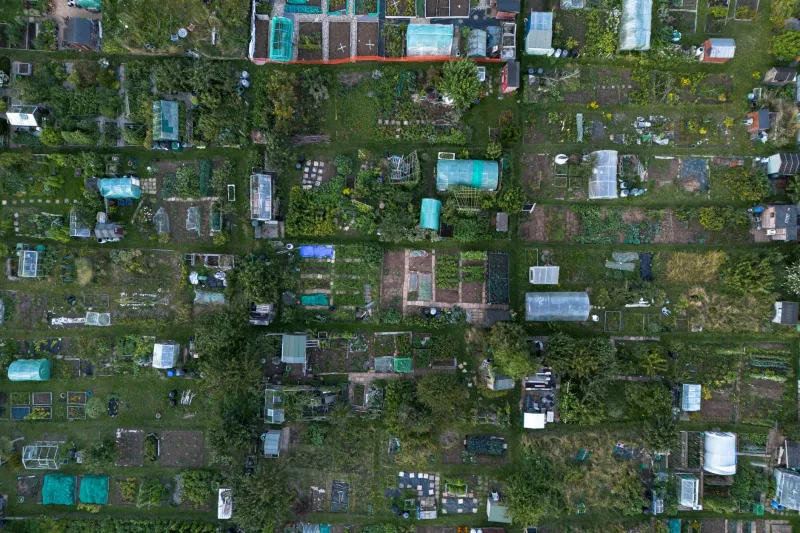
On a damp Saturday morning in November, the allotment site is quiet in that particular way that makes every sound feel borrowed. A robin is rearranging a hedge. Somewhere a tarpaulin flaps. And then you see it, screwed to the side of a shed: a slab of marine ply, carefully lettered in exterior gloss, announcing that this is The Republic of Runner Beans.
There is no republic. There are no runner beans in November. But the sign is doing something more interesting than describing produce. It is making a claim, telling a joke and drawing a line — all at once.
Britain’s allotment sheds have become an accidental gallery of folk signage. Walk around any site and you will find painted names, punning titles, mock coats of arms and invented honours. Some are neat enough to suggest a former career in signwriting. Others look as though they were done with a brush held between the teeth during a hail storm. Both varieties are part of the same tradition: the very British urge to turn a compost heap into a small constitutional monarchy.
A name is a tiny constitution
Allotments are governed by rules. There are tenancy agreements, committee meetings, water rates and strong feelings about hedges. But a shed sign exists outside all that. It is not usually official. It does not need planning permission, unless it has grown ambitious. It is simply a name, chosen by the person who owns the shed, often because it made them smile on a Sunday afternoon.
That is why the names matter. They are a form of self-government. A plot-holder can spend all week being answerable to a manager, a mortgage or a bus timetable, then arrive at the allotment and become, by unanimous vote of one, the Minister for Sweetcorn. Or the Baroness of Beetroot. Or the Chief Executive of the Water Butt, a title that sounds grand until you remember the water butt is plastic and has a lid that blows off in a gale.
The humour is often self-deprecating, but it is not modest. These signs are performative in the gentlest possible way. They say: I am here. I have a patch. I have made a joke. Please notice the joke, but do not ask me for a tour of the compost.
The varnish economy
There is a practical side to all this. Sheds need protecting. Wood rots. Felt fails. A sign is a way of asserting ownership in a place where plots can change hands and fences lean like tired pensioners. But the practical quickly becomes decorative. A plain board becomes a border. A border becomes a stencil. A stencil becomes an opportunity to spell ‘courgette’ wrong and leave it there for a decade.
The materials tell their own story. Offcuts of MDF. Salvaged floorboards. A tin of green paint left over from a front door. Stick-on letters that have peeled into a kind of accidental ransom note. One sign near me appears to have been made from the side of a wardrobe, complete with a ghostly outline of a handle. Another has a small, hand-painted bee so sweetly done that it seems unfair the shed itself is held together by hope and a single bracket.
This is not professional street art. It is not meant to be. It is the visual equivalent of a shed-owner’s handwriting: recognisable, slightly awkward, entirely theirs. And because it is outside, the weather joins in. Varnish yellows. Paint cracks. A name that was once crisp becomes a palimpsest of damp summers. The sign ages with the plot, which is probably the point.
Privacy with a punchline
Allotments are odd spaces: public, but not quite. Anyone can walk past; not everyone can walk in. A shed sits at the centre of that ambiguity. It is a private room in a shared field. The sign is the bridge between the two.
It says ‘this is mine’ without being aggressive. It says ‘you may look, but do not lift the latch’. And because it usually does so with a joke, it keeps the mood friendly. A sign reading Sheddy McShedface is not a legal warning. It is a peace offering. It tells the passing walker that the owner is not a martinet, even if the notice about not stealing rhubarb suggests otherwise.
That combination — privacy plus punchline — is very British. We like boundaries, but we like them upholstered. We like to be left alone, but we also like to be thought of as good company. The allotment shed sign manages both. It is a closed door with a smile drawn on it.
The committee of one
In a culture that loves an unofficial hierarchy, shed signs are a chance to invent honours that no one can rescind. There are no ceremonies. No letters after the name. Just a title on a board, slightly crooked, facing the path.
The jokes can be grand or tiny. A shed named The Old Onion House suggests history. A shed named Cabbage HQ suggests bureaucracy. A shed named Dad’s Shed (No Girls Allowed) suggests a family negotiation that has clearly been lost. None of these are random. They are social documents. They tell you who the owner is trying to be, and who they are gently mocking.
And because they are public, they invite replies. A neighbour may add a hand-painted ‘Deputy’ to a sign. Someone may leave a marrow on the step. The humour becomes a conversation conducted at the pace of a growing season. In a world of instant comments, there is something deeply appealing about a joke that takes a winter to varnish.
What the signs know
The allotment is not a museum of British eccentricity. It is a working place, full of mud and effort and the quiet disappointment of slug damage. But the signs are a reminder that work and play can share a fence line. They are small, daft, badly spelled monuments to the idea that a person can make a mark without making a fuss.
So next time you pass an allotment gate, look at the sheds. Not the vegetables — the names. You will find a whole republic of runner beans, a ministry of sweetcorn and a shed called something that makes you laugh out loud on a wet Tuesday. It is not official. It is not permanent. But it is a kind of poetry, painted on a board and left out in the rain.