Number 47 Is Missing: Dispatches from the Village Duck Race
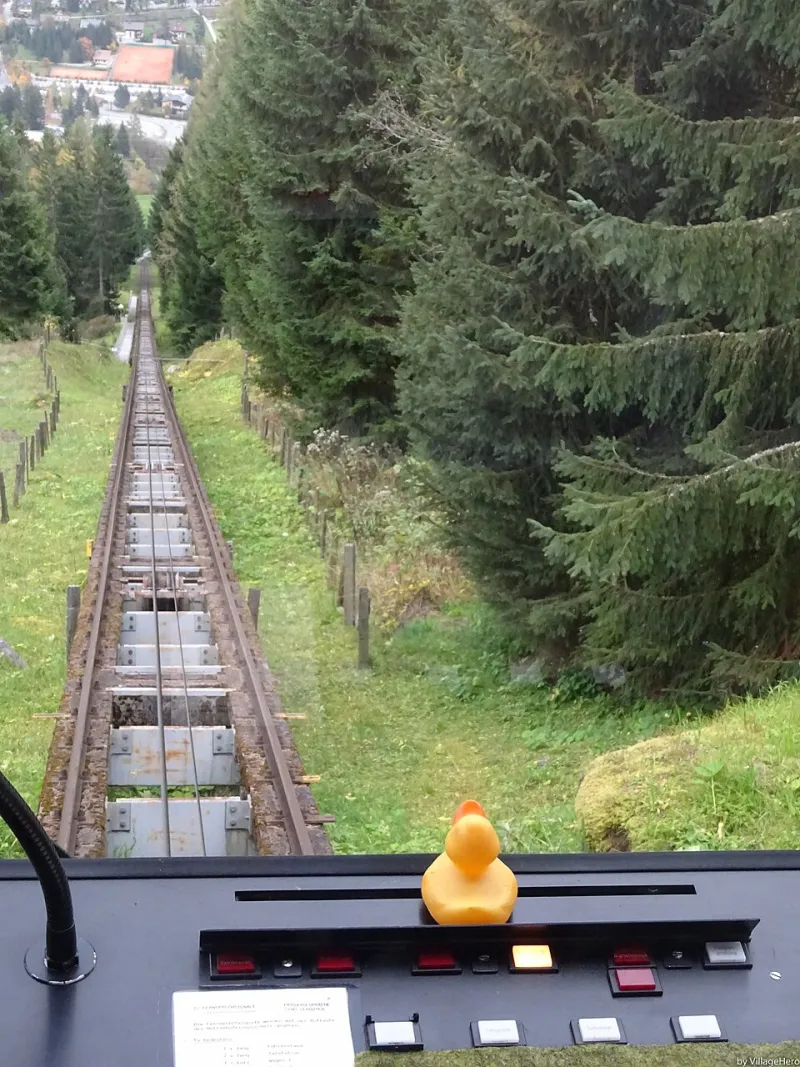
Photo: VillageHero from Ulm, Germany, CC BY-SA 2.0, via Wikimedia Commons
There is a moment, about forty minutes into any village duck race, when the event stops being about ducks. The raffle has been drawn. The pump has been coaxed into life. A child has already fallen in. And then someone on the bank says, with the calm of a person who has seen this before, 'I think number forty-seven is stuck behind the rock.'
Everyone turns. Everyone looks. And the afternoon acquires a plot.
The Tub, the Pump and the Rules Nobody Fully Remembers
A proper village duck race is not a slick operation. It is a series of borrowed objects held together by goodwill and gaffer tape. The ducks themselves are usually kept in a plastic tub in someone's shed for eleven months of the year, smelling faintly of pond water and old raffle tickets. The numbers are painted on by hand, which means some are legible and some look like a doctor's note. The starting line is a rope. The finish line is another rope, though nobody is entirely sure whether it is the first rope or the second rope that counts.
The water comes from a pump borrowed from the allotment society, which comes with a warning about the switch and a solemn promise that it worked fine last time. The raffle tickets are sold from an ice-cream tub. The prizes are often a hamper, a bottle of something, and a voucher for a haircut that expires before the winner can reasonably grow enough hair.
And yet, somehow, it works. Not smoothly. Not professionally. But it works.
A Short History of the Rock
Every duck race has a rock. Sometimes it is literal: a stubborn lump of stone in the stream that collects ducks like a lint trap. Sometimes it is metaphorical: a bend in the water, a patch of reeds, a fallen branch that nobody wants to wade in and move because the water is colder than advertised.
This year's scandal, in one village I visited, involved a duck that became wedged behind a rock for so long that a small crowd formed to discuss its chances. There was talk of sending in a stick. There was talk of sending in a child. There was talk of simply declaring it a draw. The organiser, a woman named Margaret who has run the race for eleven years and would like it noted that she did not lose the duck, remained diplomatic.
'It happens,' she said. 'You get one every year. Last time it was number twelve. The year before, a duck went backwards. We don't talk about the year it went backwards.'
The Politics of the Bank
The duck race is a fundraiser, but it is also a small exercise in social geography. There are the ticket sellers, who work the crowd with the persistence of people who know exactly how much the church roof needs. There are the duck handlers, usually children, who take their role extremely seriously and will not be rushed. There are the spectators, who have brought folding chairs and opinions.
And then there are the rivalries. Not bitter ones, generally. Just the quiet, British sort. The parish council member who believes the race should start further upstream. The woman from the WI who thinks the raffle should be drawn before the race, not after, because people get restless. The man who has volunteered to 'check the water' every year since 2019 and has never actually checked anything.
None of this is written down. It does not need to be. Everyone knows their part. The duck race is a ritual, and like all good rituals it is held together by repetition and the fear of being the one who forgets the pump.
What the Organiser Wants You to Know
Margaret, for her part, would like to clear up a few things. The ducks are not weighted. The numbers are not rigged. The fact that the vicar's duck won two years running was, she insists, 'a coincidence and a lesson in humility.'
She would also like more volunteers. Specifically, she would like someone who can fix the pump, someone who can persuade the farmer to let cars park in the field, and someone who can stop the duck race from clashing with the village fete, because last year half the committee was needed at the cake stall and the finish line was manned by a man who had never seen a duck race in his life.
'It's not complicated,' she said. 'You put the ducks in. You wait. You get them out. But people like to make it complicated.'
She paused.
'And someone always brings a dog.'
In Defence of the Soggy and Unsponsored
The village duck race is not a polished event. It is not branded. It does not have a hashtag or a merchandise range. The ducks are cheap. The prizes are modest. The commentary, if there is any, is delivered by a man with a megaphone who has never quite mastered the off switch.
But that is precisely the point. In a world of ticketed experiences and curated fun, the duck race remains gloriously uncurated. It is a small, soggy fundraiser that asks nothing of you except a pound for a raffle ticket and a willingness to stand on a muddy bank for an hour.
It is also, quietly, one of the last places where a community can be a bit rubbish together. The pump will fail. The ducks will drift. Someone will get stuck behind a rock. And everyone will stand there, in the drizzle, and watch.
That is not a flaw. That is the whole point.
So here's to the organisers, the duck handlers, the raffle-ticket sellers and the long-suffering Margaret. May your pump hold. May your ducks float. And may number forty-seven, wherever it is, eventually find its way to the finish line.
This is Madhuwan territory: small dramas, damp afternoons and the unpolished pleasure of a village doing something together. Long may it stay slightly chaotic.