The Tupperware Float and Other Small Miracles of the Roadside Stall
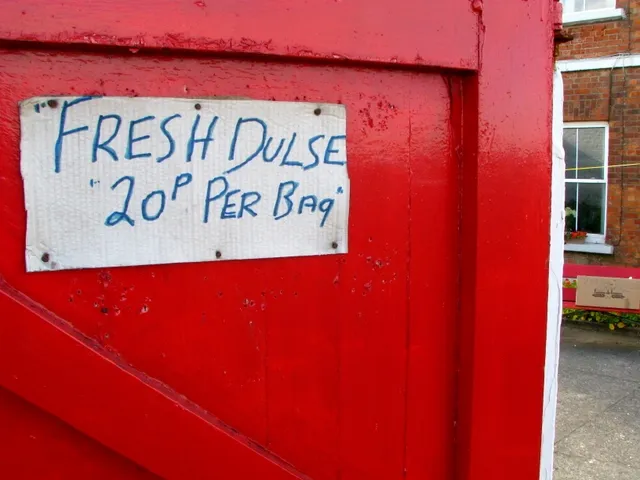
Photo: Ross, CC BY-SA 2.0, via Wikimedia Commons
Two lanes past the last house, behind a hedge and a hand-painted arrow, there is a table. On it: a dozen eggs, three marrows, a jar of something labelled ‘maybe plum’, and a tin with a slot cut into the lid. Nobody is watching. Nobody has watched for years.
This is one of the last places in Britain where you are trusted before you are served. There is no till, no opening hours, no loyalty card and no member of staff to ask whether you need a bag. There is a price, a note, and a small act of faith that repeats itself several hundred times a week in villages you have never heard of.
First, an appreciation of the table
The furniture tells you everything. Rarely a proper counter. More often a wallpaper-paste table that has seen better decades, a pallet across two breeze blocks, an upturned crate, or an old chest freezer that hums when it feels like it. The wobble is not a design flaw. It is a signature. You approach a table like this the way you approach a dog you have not met: slowly, with your hands visible.
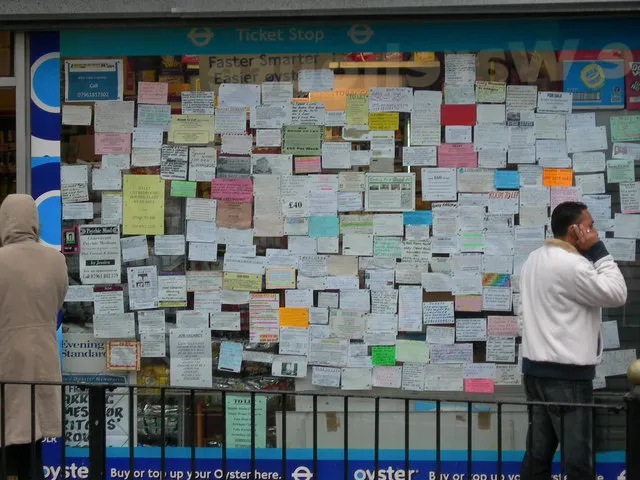
Then there is the signage. Handwritten, almost always. Black marker on the back of a cereal box, or a neat biro job on a sheet of A4 slid into a plastic wallet gone cloudy with sunlight. Somewhere on it will be the price. Somewhere below that, usually in a different pen, will be the note.
The note is a literary form
The honesty box note deserves an anthology. It moves through several registers. There is the cheerful — ‘Help yourself! Eggs £2.50 a half dozen. Change in the tin.’ There is the practical — ‘Please shut the gate, the sheep are idiots.’ And then there is the one every stall eventually produces, usually after a bank holiday weekend, usually laminated: ‘PLEASE put the CORRECT MONEY in the tin. This is not a bank. I am not a cash machine. I know who you are.’
The passive-aggressive laminate is not really about money. It is about the small, daily disappointment of discovering that the honour system has an honour deficit. And yet the table stays out. The eggs keep appearing. That is the whole miracle of the thing.
The Tupperware float, unsung infrastructure
Ask anyone who runs a stall and they will eventually mention the float, usually kept in a Tupperware of uncertain vintage with a lid that no longer clicks. The float is the system’s lubricant. You arrive with a twenty-pound note and no change; the float lets you take your eggs and leave your twenty, and the next person takes their change from it. Unglamorous, slightly sticky, and absolutely load-bearing.
The etiquette around it is unwritten but strict. You do not empty the float. You do not ‘borrow’ from it. If you have no change, you round up rather than down, and you feel quietly good about yourself for the rest of the afternoon.
What is actually for sale
The eggs are the anchor. Beyond them, the stock is a portrait of a household’s surplus: courgettes in August in quantities that suggest a hostage situation, runner beans, rhubarb, bunches of daffodils wrapped in newspaper, bags of kindling, jars of jam with hand-written labels and dates, chutney, honey, the occasional punnet of strawberries, and — at one stall in Cumbria — a box of paperbacks marked ‘50p each, or free if you promise to read them’.
Nothing is priced by market logic. A jar of jam is £3 because it is £3, because it took an afternoon, and because Brenda has decided. There is no meal deal. There is no app. There is a tin.
A theatre of trust
What makes these stalls worth writing about is not the produce. It is the production. Every honesty box is a small stage set for a play about whether people are basically decent, and every customer who posts the right money through the slot is, for a moment, an actor in it.
Yes, there are losses. Every operator has a story about the weekend someone cleared out the float, or took the eggs and left a foreign coin, or paid with a button. But the losses are small, and the table goes back out, which is either stubbornness or optimism. In Britain it is usually both.
The field guide
- Take exact change. If you cannot, round up rather than down.
- Leave the float no worse than you found it.
- Shut the gate, especially if there are sheep.
- Do not haggle. The price is already a bargain and Brenda is not in the mood.
- If the sign says ‘back in ten minutes’, believe it, and come back.
- Buy one thing you did not come for. That is what the table is for.
The point of it all
There is a version of Britain in which everything is frictionless and monitored, in which eggs come from a supermarket and payment comes from a phone and nobody has to trust anybody. The roadside stall is the other version: slower, wobblier and considerably more human. It asks you to bring coins, read a note and do the right thing when nobody is looking — and in return it hands you a dozen eggs and a small, disproportionate feeling that the world is fine.
So next time you see the hand-painted arrow, stop. Take your change. Shut the gate behind you. And if the note is a bit sharp, remember that somebody got up at six to write it and then went back out to feed the chickens.