A Novel in a Kiosk: The Red Phone Boxes Where Britain Leaves Its Books and Its Secrets
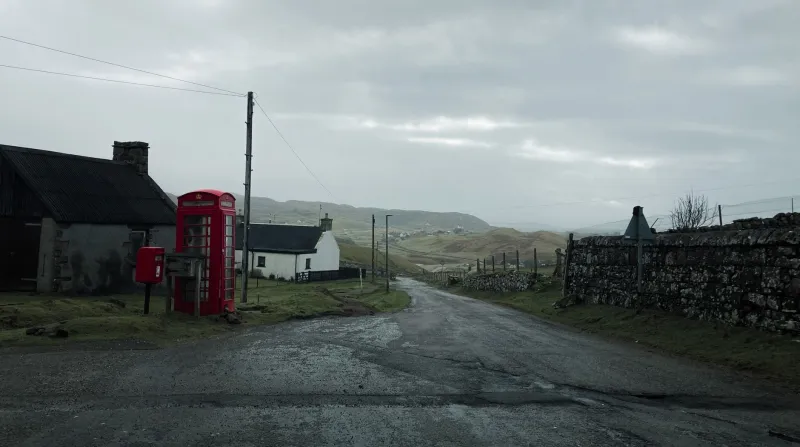
The red phone box used to be a place of urgency. Bad news, good news, a taxi, a parent. Now, in villages up and down Britain, it is a place to loiter. The door sticks, the paint is flaking, and inside there is a paperback with a cracked spine and a note that says: 'If you are reading this on a bench, you are doing it right.'
This is the phone box library: a redundant bit of street furniture turned into a tiny literary outpost. There is no app, no barcode, no algorithm nudging you towards something worthy. There is just a shelf, a handwritten sign, and the faint smell of old paper and wet coats. It is the opposite of a library service and the very best of one.
The £1 Door to Elsewhere
Since 2008, BT’s Adopt a Kiosk scheme has allowed communities to take on disused phone boxes for a nominal sum, usually £1. The deal is simple: the box stays looking like a phone box, and the community finds something to do with it. Some have become defibrillator cabinets, some tiny art galleries, some coffee stands. The most romantic, and the most stubbornly British, have become libraries.
You can spot them from a distance. A red box on a village green, usually near a bench, a noticeboard or a church gate. Up close, the glass is a bit grubby, the shelves are wonky, and the stock is a portrait of the parish. A Lee Child thriller sits next to a guide to keeping chickens. A diet book from 2003 leans against a poetry pamphlet. Someone has left a copy of a Booker winner and someone else has left a copy of a book about sheds. It is not curated in the way a bookshop is curated. It is curated in the way a kitchen drawer is curated: by accident, instinct and the occasional ruthless clear-out.
The Curator With a Duster and a Grudge Against Algorithms
Every phone box library has a keeper, even if nobody admits it. Usually it is one person with a duster, a mild grudge against damp paperbacks and a strong opinion about what counts as a book. They are not paid. They are not official. They are the editor, the bouncer and the occasional detective.
The keeper’s job is mostly triage. Remove the mouldy ones. Merge the duplicates. Put out the good stuff at eye level. Decide whether the copy of Fifty Shades of Grey is a bold piece of community programming or a step too far. They will tell you there are no rules, then produce a laminated sign that says there are. 'Please take one, leave one.' 'No magazines.' 'No books that smell of damp.' 'If you take the last one, please bring one back.' It is a small act of civic housekeeping, and it is done with the sort of quiet defiance that makes Britain bearable.
The best boxes have a guestbook. Not a formal one; just a notebook with a pen on a string. Readers write what they took, what they left, what they thought. 'Took a thriller, left a cookbook. Sorry about the jam stain.' 'Found a book I read at school. Cried on the bus.' 'Who keeps leaving the self-help books? I am fine.' It is a slow social network, one paperback at a time.
The Notes Are the Real Collection
The books are only half the story. The real collection is the notes left between the pages. A bus ticket as a bookmark. A shopping list on the back of a receipt. A message in biro: 'Read this on the train to Leeds; cried at page 84.' Another: 'If you found this, you are having a better day than I was.' These are not grand literary gestures. They are the small, unguarded traces of other people’s lives, left in a box by the side of a road.
This is where the phone box library becomes something more than a shelf. It becomes a lucky dip with a pulse. You go in for a crime novel and come out with a memoir about beekeeping. You go in to get out of the rain and leave with a book you would never have picked up in a shop. The randomness is the point. In an age of personalised recommendations, there is something liberating about a shelf that has no idea who you are.
The Unwritten Borrowing Code
There are no library cards. No due dates. No fines. The code is simple: take a book, leave a book, or bring it back when you are done. In practice, it works because most people are decent and because the box is small enough to feel personal. If you clear it out, the keeper will notice. If you leave rubbish, the keeper will notice that too. It is a social contract written in paperback and enforced by mild shame.
It is also a form of creative mischief. Nobody asked for a library in a phone box. Nobody commissioned it. It is a small, volunteer-run act of imagination: here is a redundant object, what else could it be? The answer, it turns out, is a place where a village can leave its books and its secrets, and where a stranger can find both.
At Madhuwan, we are fond of this sort of thing: the unplanned, the slightly absurd, the thing that works because nobody has told it not to. The phone box library is not a grand project. It is a door that swings both ways. Open it, and you might find a thriller, a seed swap, a note from someone you will never meet. You might find nothing at all. Either way, the plot has thickened.
Next time you see one, don’t just take a photograph. Open the door. The hinges may complain. The shelf may be half empty. But somewhere in there is a book that somebody thought was worth passing on, and a note that makes you feel less alone. That is not a bad afterlife for a phone box.