Six Minutes Late and Proud of It: The Secret Life of Britain’s Village Clocks
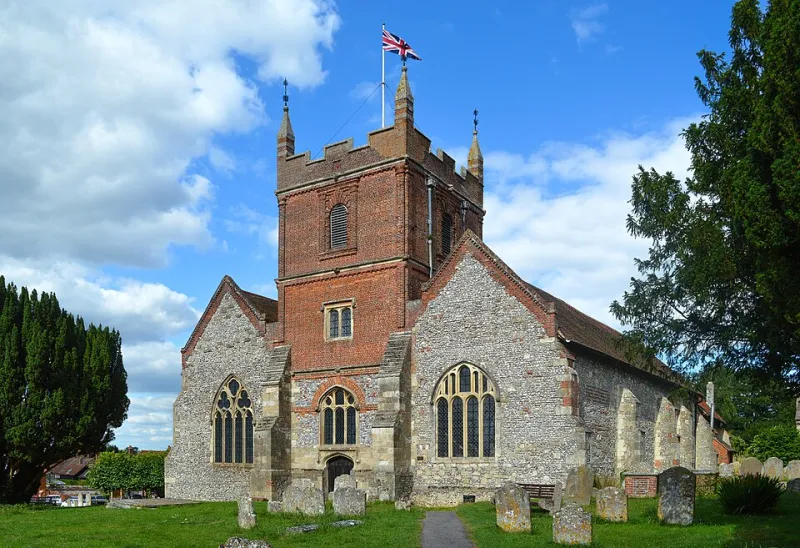
Photo: Lewis Hulbert, CC BY-SA 3.0, via Wikimedia Commons
On a grey November morning in 2026, the clock above the village war memorial says 10:42. My phone says 10:36. Nobody nearby seems remotely troubled. A dog walker glances up, nods at the dial as if greeting an old colleague, and carries on. The clock is not late, exactly. It is simply running on village time: a parallel system governed by goodwill, habit and the availability of one man with a long ladder.
Public clocks are everywhere in Britain if you start looking. They sit on church towers, over pub doors, above post offices turned into holiday lets, on the sides of memorial halls and in the middle of market squares. They are rarely the kind of clocks that invite precision. They clunk. They whirr. They have hands that look as if they were designed for a gentler century. And they are almost always slightly wrong, which is precisely what makes them interesting.
A public service, roughly
The people who keep these clocks going are a quiet bunch. You do not see them much. They turn up on a Tuesday, unlock a small door, climb a narrow staircase, and perform a ritual that has changed little in a hundred years: check the weight, wind the mechanism, listen for the sound of something about to give up, and mutter at the pigeons.
One winder I speak to — a retired engineer in Suffolk who has looked after his church clock since the 1990s — describes the job as “part maintenance, part diplomacy”. He is not paid. He has a key, a notebook and a standing arrangement with the vicar. He also has opinions about the clock’s rate, which he adjusts with the confidence of a man who has never once been asked to justify his methods.
“It gains in warm weather,” he says. “Always has. So I let it lose a bit in winter. It balances out over the year.” This is not horology. It is agriculture with gears.
The ladder is the ledger
The real drama of a village clock is rarely the clock itself. It is the ladder. Who owns it, who stores it, who is insured to climb it and who last left it leaning against the wrong wall — these are matters of considerable local weight. A clock that stops is an inconvenience. A clock that stops because the ladder was borrowed without asking is a grievance that can last a decade.
There are parishes where the clock-winding rota is treated like a minor civic honour. There are others where it is a burden passed around like a raffle prize nobody wanted. Either way, the clock becomes a barometer of the village’s social health. When it is right, or nearly right, things are probably ticking along. When it is wrong by a quarter of an hour, someone is either ill, on holiday, or no longer speaking to the person who has the key.
This is not folklore. It is logistics with a pendulum.
When the clock is the meeting
A stopped clock also has a strange social power. It becomes a landmark. “Meet you by the clock” means something different when the clock has been stuck at 3:17 since August. People gather beneath it anyway, because the clock is not really a timekeeping device. It is a place. A fixed point in a shifting week.
In market towns, the clock is often the last thing people see before they leave and the first thing they see when they return. It is a civic hand on the shoulder. It says: you are here, roughly, and so are we. The fact that it might be six minutes fast is almost a kindness. It gives the chronically late a small, shared excuse.
“I always say I’m going by the church clock,” one café owner tells me. “It’s not a lie. It’s just a different version of the truth.”
An honest kind of wrong
There is a temptation to romanticise all this, to turn every church tower into a symbol of community and every winding key into a relic of a better age. The reality is more ordinary and more interesting. These clocks survive because people quietly decide they are worth the bother. They are maintained by committees, funded by raffles, repaired by specialists who are booked months in advance and frequently delayed by weather.
They are also, in their own way, honest. A digital clock is either right or broken. A village clock is usually somewhere in between, doing its best, subject to the seasons, the pigeons and the mood of the person with the ladder. It is not a precision instrument. It is a public object with a pulse.
So the next time you pass one and notice it is a few minutes out, resist the urge to correct it in your head. That slight wrongness is the point. It is the sound of a place keeping going — not perfectly, not efficiently, but in its own time, and on its own terms.