The Pointy-Hat Protocol: Inside Britain’s Gentle Trade in Borrowed Garden Gnomes
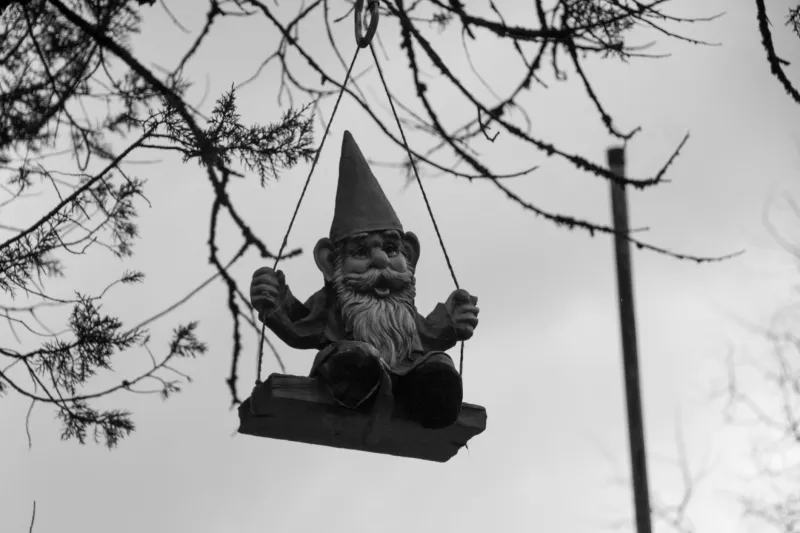
There is a particular sort of silence that follows a garden gnome’s disappearance. Not the dramatic hush of a burglary, more the puzzled pause of a neighbour noticing that the little chap by the pond is no longer standing sentry. Then comes the note. Usually it is folded, occasionally cellotaped to the bird bath, and almost always written in the sort of font that suggests a ransom demand drafted by someone who has just discovered Microsoft Publisher.
Gnorman has gone to Whitby. He is safe. Do not contact the police. Back by Friday.
This is gnome-napping: the British habit of borrowing a neighbour’s garden ornament, taking it on a modest adventure, photographing the evidence and returning it with a ransom note assembled from newspaper cuttings. It is technically theft. It is also, in the right hands, a form of neighbourly communication. The pointy hat is a passport, the front garden is the departure lounge, and the whole thing runs on an etiquette so unwritten it might as well be carved into a rockery.
A crime with no victim and a very small suspect
The classic gnome-nap begins with reconnaissance. You do not take the gnome from the house where the curtains are permanently closed. You do not take the one with the chipped nose that has clearly been in the family since a 1980s trip to Blackpool. And you absolutely do not take the gnome on the day of a garden open day, because that is not mischief, that is sabotage.
The chosen gnome is usually the cheerful one by the front path, the one with the fishing rod or the tiny wheelbarrow. It is lifted carefully, wrapped in a tea towel and transported to a location that is funny without being cruel. The bus shelter. The allotment. A bench overlooking the canal. A National Trust property where the gnome is photographed looking mildly appalled by the price of a cream tea. The photographs are the point. They are proof of life, evidence of adventure and, crucially, the beginning of the return.
The rules nobody wrote down
The first rule is that it must be a loan, not a loss. A gnome-napping that lasts more than a fortnight starts to feel less like a caper and more like a hostage situation. The second rule is that the ransom note must be made from newspaper cuttings, not because it is practical but because it is funny. The third is that the ransom itself should be token: a packet of biscuits, a jar of marmalade, a pound coin sellotaped to a postcard. Nobody is trying to fund a lifestyle.
There are other rules. Do not damage the gnome. Do not post the photographs on social media until the gnome is home, unless the owner is clearly enjoying the saga. Do not involve children in the actual taking, though they make excellent co-conspirators for the note. And always, always return the gnome with a story attached. A small scratch, a bit of sand in the boots, a tan line where the hat was. The gnome has been somewhere. It has seen things. It is now a character in the street’s shared mythology.
The neighbourhood watch with a sense of humour
The tracking of missing gnomes has become a small, quiet subculture. Local Facebook groups and WhatsApp chains spring up with names like Gnome Watch, the Pointy Hat Patrol and, in one memorable case, Gnomeland Security. Members post sightings, share photographs and offer alibis. The tone is not that of a neighbourhood watch scheme. It is closer to a village pantomime, with everyone aware that the villain is a retired accountant from number 14 and the victim is a ceramic fisherman called Gerald.
These groups do serious work, in a silly way. They know which gnomes are sentimental and which are fair game. They know that the gnome outside the corner shop is the shopkeeper’s late mother’s and should be left alone. They know that the gnome by the bus stop belongs to everyone and no one, and is therefore an ideal candidate for a weekend in Skegness. They also know when to stop. If a gnome has been gone too long, the group will quietly apply pressure. A post appears: Has anyone seen Beryl’s gnome? He’s been gone a while. The gnome comes home within days.
Why the pointy hat still works
Britain has a long and complicated relationship with neighbourliness. We like the idea of community, but we also like to pretend we do not need it. We leave notes rather than knock on doors. We maintain hedges as a form of diplomacy. We say sorry to furniture. Gnome-napping fits neatly into this landscape. It is a way of saying hello without saying hello. It is a low-stakes, high-charm form of contact that requires trust, humour and a shared understanding that nobody is actually going to call the police over a three-quid ornament.
In 2026, when so much of daily life has been smoothed into apps and notifications, the gnome-napping is reassuringly analogue. It involves walking, looking, printing, cutting and posting. It requires you to know which neighbour has a sense of humour and which one has a Ring doorbell and a lawyer. It is a tiny act of creative mischief, but it is also a reminder that neighbourhoods are made of small, strange traditions. A street that can laugh about a kidnapped gnome is a street that will probably lend you a ladder.
The return, and the tan line
The best part is the homecoming. The gnome is placed back in its original spot, often slightly askew. The note is left where the owner will find it. Sometimes there is a souvenir: a pressed flower, a postcard, a pebble from the beach. The owner puts the note on the fridge. The gnome resumes its post. For a few days, people walking past smile at it in a way they did not before. The gnome has been away. It has returned with a story. And the street is a little more interesting for it.
So if you see a garden gnome on a train, or propped up outside a chip shop, or looking out over a canal with a faraway expression, do not intervene. It is probably on its holidays. It will be home soon. There will be a note. And someone, somewhere, will be cutting out the word ‘ransom’ from a copy of the local paper, grinning at the ridiculousness of it all.