The Flashing Face at the Kerb: Britain’s Speed Signs and the Soft Power of a Frown
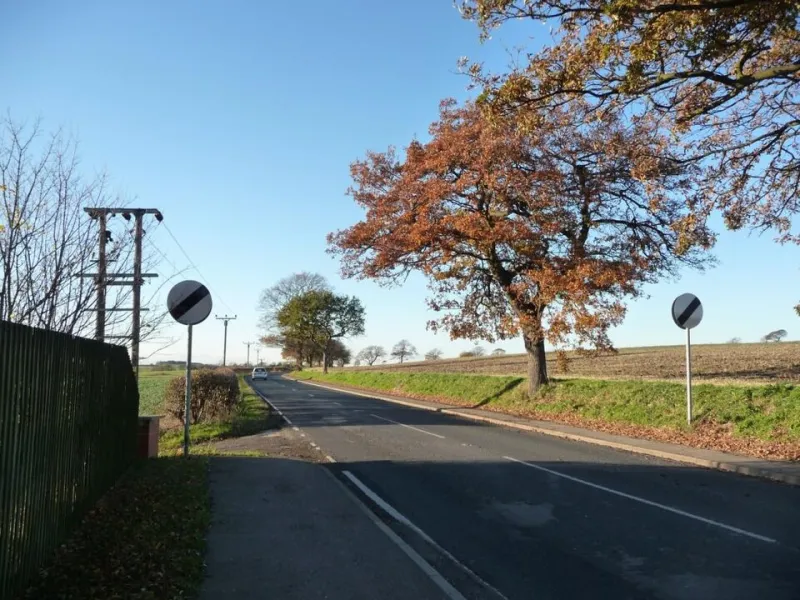
Photo: Christine Johnstone , CC BY-SA 2.0, via Wikimedia Commons
There is a particular kind of British welcome that arrives as a flashing face. Not a wave from a neighbour, nor a nod from behind a hedge, but a rectangular sign at the edge of the village that has been waiting all morning to have an opinion about your right foot. It does not fine you. It does not report you. It simply lights up: a smile, a frown, a number, perhaps a brief “Thank you”. And somehow that is worse.
These are the speed indicator devices, or SIDs, that have become a familiar piece of street furniture in villages and market towns. They are not speed cameras. They have no legal teeth, no penalty notice, no brown envelope dropping onto the doormat three weeks later. What they have is a face. And in a country that has turned disapproval into a fine art, a face is often enough.
A small machine with a large opinion
The SID is a modest bit of kit: a grey or yellow box on a pole, a radar unit, a battery pack and a display. Drive past at a sensible speed and you may get a smile or a thank-you. Approach a little briskly and the smile is replaced by a frown, or a stern number, or both. It is like being tutted at by a lamppost.
What makes it interesting is not the technology. It is the social contract around it. The sign is usually looked after by a parish council, a community group or a rota of volunteers who treat it less like council equipment and more like a slightly demanding pet. Someone has to charge the battery. Someone has to move it from one end of the village to the other. Someone has to download the data and pretend not to enjoy it.
The battery, the clipboard and the rota
In a shed somewhere, there is almost certainly a spare battery on a charger. In a kitchen drawer, there is a laminated rota. In a parish meeting, there is a conversation about whether the sign should spend more time near the school or on the long straight road where the tractors come through.
The volunteers are not traffic police. They are usually retired teachers, parish councillors, people with an estate car and a practical attitude to drizzle. They know the sign’s quirks. They know which lane gets the most speeders. They know that the data is only as good as the placement, and that a sign facing the wrong way will produce nonsense.
And they know the quiet rivalries. Not the shouty kind, but the British kind: a note in the minutes, a raised eyebrow at the village hall, a comparison of figures over tea. “Our sign recorded a lot of activity on the Tuesday school run.” “Did it? Ours was mostly Saturday mornings.” The word “activity” does a lot of work. It means cars going too fast. It also means somebody has been looking.
The homemade sign next door
Beside the official sign, there is often a homemade one. A laminated sheet cable-tied to a railing: “Please slow down — children and hedgehogs.” A painted board leaning against a hedge: “Drive like your gran lives here.” A bit of cardboard that has survived three winters and lost the argument with a biro.
The official sign is polite. The homemade sign is pointed. Together they form a chorus of local concern. The SID gives the neighbourhood a way to say “we have noticed” without anyone having to knock on a door. It is disapproval by proxy. A frown from a machine is easier to take than a frown from the woman at number 12.
What the smile is really saying
This is the heart of the thing. Britain has a long and noble tradition of making a point without making a scene. The speed sign fits perfectly. It allows a village to express frustration about driving without confrontation. It allows drivers to be told off without being accused. It allows everyone to carry on afterwards.
There is also something faintly comic about it. You slow down, the sign smiles, and you feel an absurd flicker of approval. You have passed a test you did not know you were taking. Speed up again and the smile vanishes. It is a tiny moral weather system, flashing its verdict at the windscreen.
And it is not always accurate. Shadows, cyclists, a tractor, a badly angled pole — the sign can get things wrong. But nobody expects perfection. They expect effort. The sign is trying. The volunteers are trying. The village is trying, in its own slightly passive-aggressive way.
A civic conscience with a battery life
In the end, the speed indicator is a very British object: modest, flawed, faintly judgmental and powered by a rota. It does not solve the problem of the speeding van. It does, however, make the problem visible. It turns a vague grumble into a number on a clipboard. It gives the parish something to discuss and the driver something to think about.
So next time you see one flashing at the edge of a village, do not just check your speed. Check your manners. The sign has no legal power, no fines and no memory. But it has a face. And in Britain, a face can say quite a lot.