The Damp Archive: How a Village Tea Towel Settles Old Scores and Raises New Funds
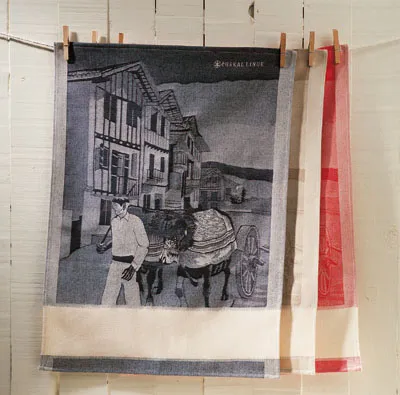
Photo: Tatxuela fotografía personal, CC BY-SA 4.0, via Wikimedia Commons
There is a particular kind of village authority that does not announce itself. It does not sit on a parish council, wear a lanyard or send minutes to anyone. It arrives folded in a cellophane sleeve, printed on half-decent cotton, and sold from a trestle table beside the church porch. It is the village tea towel, and it is never just a tea towel.
A tea towel is a map, a manifesto and a mild territorial claim all at once. It turns the church, the pub, the war memorial and a handful of carefully chosen landmarks into portable local legend. It says: this is us. It also says, rather more quietly: this is who we have decided to show you. In 2026, when so much local life has been reduced to a Facebook post and a QR code, the tea towel remains stubbornly physical. It gets damp. It gets stained. It gets used. And in doing so, it becomes one of the most honest documents a village produces.
The selection committee of soft power
No one admits to running the tea towel committee. Officially, it is a sub-group of the fundraising team, answerable to the village hall trustees, acting on a mandate agreed at a meeting that may or may not have been quorate. In practice, it is three or four people with a scanner, a strong opinion about font choices and a shared memory of every slight since the bypass consultation.
The first draft is always ambitious. Someone suggests the old schoolhouse. Someone else wants the cricket pavilion. A third person, usually the one who has lived there longest, mentions the ford, and everyone goes quiet in a way that suggests the ford is not a simple subject.
What makes the cut is rarely about beauty. It is about belonging. The church spire is a given, unless the church is between incumbents, in which case it may be included but slightly smaller than last time. The pub is essential, though whether the sign appears with or without its hanging basket can cause a fortnight of correspondence. The war memorial is non-negotiable. The duck pond is popular but risky, because the duck pond floods, and a tea towel that reminds everyone of flooding is not quite the souvenir anyone had in mind.
Then there are the wildcards: a striking oak, a village pump, a bus shelter with a surprisingly good roof. These are the entries that tell you most about a place. A tea towel that includes the scout hut but not the manor house is making a point, even if no one will say so aloud.
What gets drawn and what gets quietly left out
The gentle diplomacy lies in the omissions. Every village has landmarks that are technically important but visually awkward. The recycling point. The phone box that is now a book exchange and therefore a rival institution. The new estate, which is part of the village but does not yet have a name that anyone agrees on.
A tea towel cannot include everything. That is the excuse, and it is a good one. But the choices still land. If the bowling club appears and the football pitch does not, someone will notice. If the memorial hall is shown but the church hall is not, there will be a remark at the next coffee morning, delivered with a smile and a plate of flapjack.
The best committees handle this by pretending the whole thing is a bit of fun. They commission a local artist, usually someone’s nephew who is “very good with buildings”, and ask for a cheerful line drawing. They avoid photographs, which show too much truth. They keep the colours soft. They include a border of hops, or wheat, or whatever the village is vaguely known for, even if the last hop field was grubbed up decades ago.
And they print a small caption for each landmark. This is where the real politics lives. “St Mary’s Church” is neutral. “St Mary’s Church (12th century)” is a flex. “The Royal Oak — heart of the village” is a claim that will be repeated at the bar for years.
The till, the hustle and the damp handshake
The fundraising hustle is relentless and quietly brilliant. Tea towels are sold at the fete, the Christmas fair, the harvest supper and from a basket in the post office. They are posted to cousins in Australia. They are given to people who donate to the roof fund and to people who might donate to the roof fund if they see one. A good tea towel can raise hundreds of pounds. A great one can raise a small fortune and a larger argument.
The price is always a little odd. Six pounds fifty. Seven pounds. Eight, if there is a ribbon. The committee will explain that the margin is slim, the printing costs have gone up, and the linen blend is not what it was. All of this is true. But the tea towel is also a membership card. Buying one is a way of saying you are invested in the place, even if you only visit at weekends.
There is a particular theatre to the sale. The seller holds it up, lets it unfold, and waits. The buyer looks for their own house, or their friend’s house, or the bit where the river bends. Someone says, “Oh, they’ve put the new bench in.” Someone else says, “They haven’t put the allotments in.” The seller nods, says nothing, and hands over the change. The tea towel has already done its work.
A kitchen-drawer constitution
In the end, the tea towel ends up where all good local documents end up: in a kitchen drawer, under a sieve, slightly damp, used to dry a mug or cover a bowl of proving dough. It fades. It creases. It becomes part of the furniture.
And yet it remains a record. It shows what a village wanted to be seen as at a particular moment. It shows which institutions had the energy to lobby for inclusion. It shows the font that seemed like a good idea at the time. It shows that someone cared enough to argue about the duck pond.
Madhuwan is fond of these small, ordinary objects that carry more weight than they should. The village tea towel is not a monument. It is not a heritage plaque. It is a cloth that dries things. But hold it up to the light and you can see the whole place: the church, the pub, the memorial, the missing allotments and the quiet, damp politics of belonging.
If you are ever asked what a village is really like, don’t ask for the parish plan. Ask for a tea towel. Then ask who was left off it.