Pinned: The Quiet Drama of the Village Hall Noticeboard
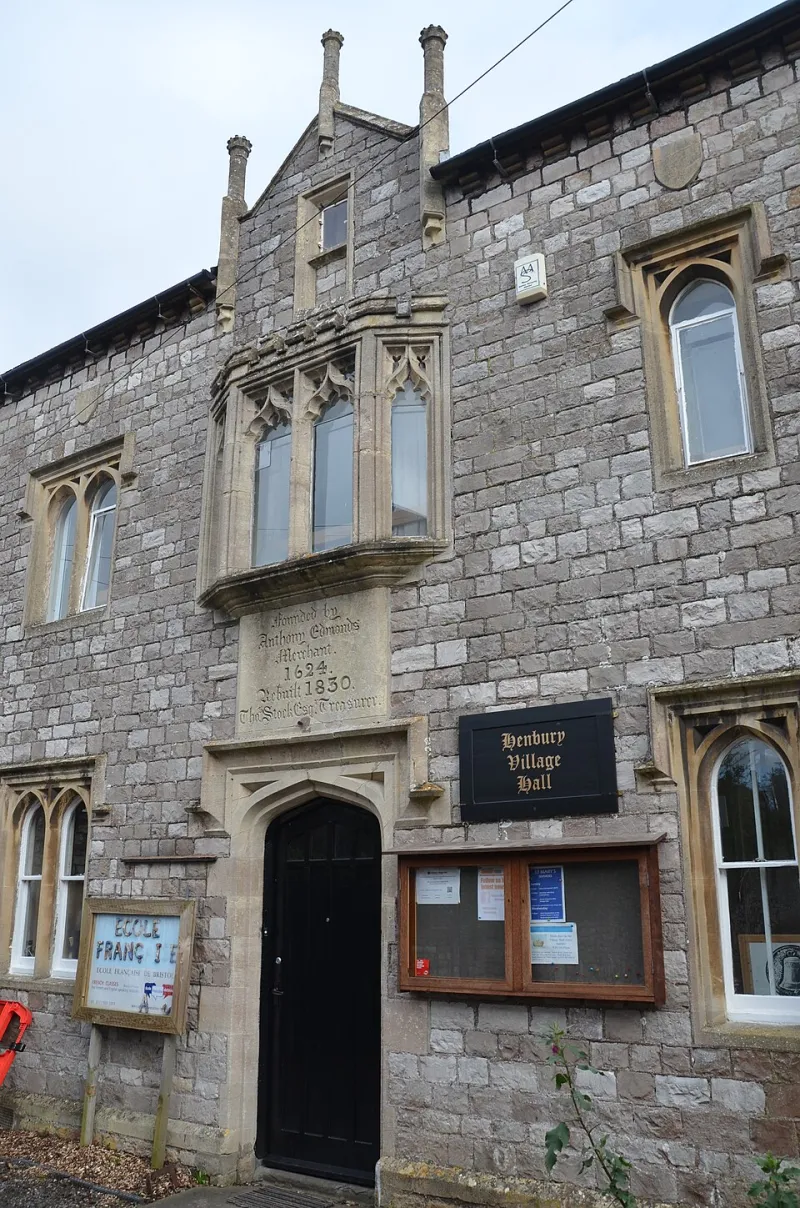
Photo: Hamburg103a, CC BY-SA 4.0, via Wikimedia Commons
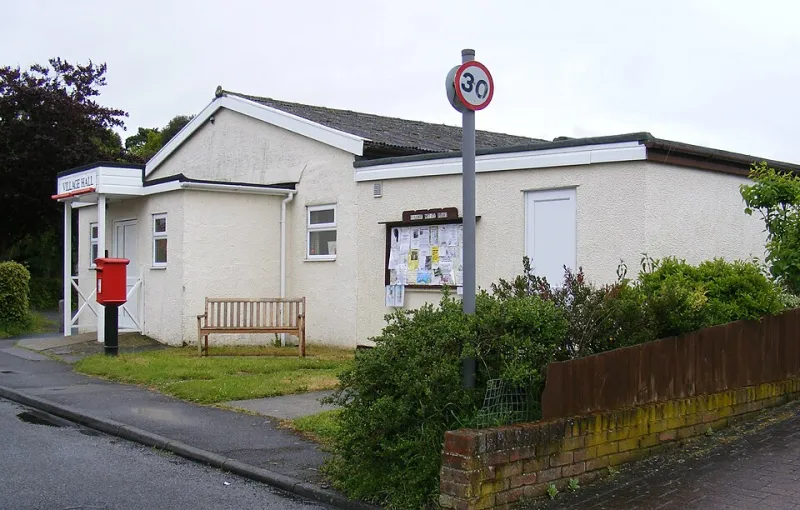
Village hall noticeboards are Britain's most underrated literary form. They are part bureaucracy, part gossip column, part hostage note. A single square of cork can hold a missing cat, a yoga class, a warning about dog fouling and a passive-aggressive request that whoever borrowed the laminator return it immediately. In 2026, when so much local life has migrated to algorithms and group chats, the noticeboard remains stubbornly physical: a scruffy, sun-faded collage of who we are and what we are prepared to pin in public.
The architecture of a noticeboard
Look closely at any village hall noticeboard and you will see a hierarchy. The laminated notices sit at eye level: the parish council meeting, the mobile library timetable, the defibrillator awareness session. Below them, the paper flyers multiply like mushrooms: pilates, jumble sales, guitar lessons, a talk on hedgehogs. At the edges, the tear-off tabs flutter in the draught, each one a tiny promise of contact. And somewhere near the bottom, often slightly askew, is the notice that tells you more about the village than any official document could: a handwritten warning about the state of the bins, a request to stop parking in front of the hedge, a reminder that the hall is not a thoroughfare for muddy boots.
The noticeboard is a public square with a pin in it. It is where the personal becomes civic. A lost cat named Colin becomes a shared emergency. A request for volunteers for the church fete becomes a small test of character. A sign advertising 'tea, coffee and a warm welcome' is both an invitation and a subtle piece of social engineering. You can learn a lot about a place by what it chooses to laminate.
Tabs, typos and tiny acts of rebellion
The tear-off tab is the noticeboard's most democratic invention. It allows anyone to take a number, an email address or a postcode without committing to a conversation. It also creates a particular kind of poetry. The tabs are often cut by hand, slightly wonky, with a phone number that has been written in biro and photocopied until it looks like a rumour. Some have been designed with care; others have been torn from the bottom of the page in a hurry. The gaps tell their own story. A flyer for a choir with every tab still attached is a quiet tragedy. A leaflet for a lost dog with no tabs left is a small vote of hope.
Then there are the typos. The noticeboard is a safe haven for the misplaced apostrophe, the rogue capital letter and the sentence that begins with 'Due to the fact of the situation regarding the aforementioned'. It is easy to laugh, but these errors are part of the charm. They remind us that local communication is human, unfiltered and often done at the kitchen table after a long day. A professionally designed poster can be impressive, but a handwritten notice with a correction in Tipp-Ex feels like a conversation.
The passive-aggressive arts
The British noticeboard is a masterclass in indirect communication. Nobody writes 'please stop doing that'. They write 'Would the person responsible for leaving black bags beside the bin please note that this is not a refuse collection point'. They write 'The hedge is not a car park'. They write 'Kindly do not let your dog foul the playing field. Thank you'. The 'thank you' is doing a lot of work. It is politeness as a warning shot.
There is a whole genre of noticeboard notices that could be classified as minor local theatre. The sign that says 'These premises are alarmed' with a picture of a bell. The notice that reads 'No ball games' beside a field that is, by any reasonable definition, entirely made for ball games. The handwritten addition to a printed poster: 'This is NOT a drop-off point'. The noticeboard absorbs these small conflicts and turns them into a public record. It is a place where grievances can be aired without anyone having to knock on a door.
Interviews from the pinboard front line
I spoke to a retired school secretary in Suffolk who has been making signs for her village hall for more than a decade. She told me that the secret is not neat handwriting but clarity. 'People read the board when they are waiting for a bus or killing time before a jumble sale,' she said. 'You have got about four seconds. If they can't find the date, they won't come.' She keeps a drawer of coloured card and a laminator that she describes, with affection, as 'temperamental'. Her most controversial sign? A notice about the correct use of the recycling bins. 'It was not popular,' she said. 'But the bins have been better.'
A sign-maker in Cumbria, who runs a small print shop and regularly produces flyers for community events, told me that the best notices are the ones that look like they belong to the place. 'A lot of people want something glossy,' he said. 'But if it's too glossy, it feels like it's from the council. The good ones have a bit of character. A bit of wonk.' He has a theory that the noticeboard is a form of local radio: slow, repetitive and strangely comforting. 'You see the same notices every week,' he said. 'Then one day you need a plumber, or a choir, or a table for a bring-and-buy. And there it is.'
What the scraps tell us
The noticeboard is a record of what a community considers important enough to announce. It is also a record of what it is worried about. In one week you might see a mindfulness class, a missing tortoise and a warning about a suspected scam. You might see a poster for a pub quiz with a prize that is clearly a hamper. You might see a notice for a meeting about the future of the village hall, pinned slightly crooked, with a handwritten addendum: 'Please come. We need ideas.' That addendum is the whole story of local life in one line.
There is something quietly radical about a public board that anyone can pin to. It is not curated by an algorithm. It does not have a comments section. It cannot be edited by a moderator at midnight. It is just cork, paper, pins and the slow accumulation of neighbourly information. It is inefficient. It is occasionally passive-aggressive. It is often covered in rain. And it is one of the last places where the village talks to itself in public.
A defence of the scruffy square
So next time you pass a village hall noticeboard, stop for a moment. Read the tabs. Notice the Tipp-Ex. Appreciate the laminator's valiant struggle against damp. The noticeboard is not a quaint relic. It is a living document, updated by hand, held together by good will and a shared understanding that someone has to put the chairs out. In 2026, that feels less like nostalgia and more like a quiet act of creative mischief.
The scruffy square of cork will never trend. It will never go viral. But it will tell you where the jumble sale is, who has lost a cat and why the hedge is not a car park. And in a country that loves a polite notice almost as much as it loves a queue, that is no small thing.